12 Min Read
December 23, 2025
By
Dr. Josephine Taylor is a Postdoctoral Fellow at University College Dublin on the Marine Institute–funded ENACT project. Her research examines energy narratives and change in Ireland’s coastal communities through humanities and qualitative methods. An interdisciplinary scholar in energy and environmental humanities, she studies energy, nonhuman species, gender, and culture, and is the author of The Nonhuman Narratives of Energy.
They saw the boats. Heard those same repurposed boats who came to kill them for their successful blubber, the oil that lit the books and blood of slavery. Even now, it is the commercial pursuits of another form of oil that threatens the bowhead whales whose fat fuelled the capitalist project. Bowhead whales have breathed so much history and outlived it too (Gumbs 2020, 47).
Writing from the perspective of onlooking whales, writer and activist Alexis Pauline Gumbs illuminates a continuum between an earlier energy regime (nineteenth-century whaling) marked by violence against marine animals and the present-day devastation of their habitats in the era of fossil-fuel energy. The whale, in its plight as a nineteenth-century marine resource, can be seen as an earlier iteration of animals’ place and role in the culture of energy production.
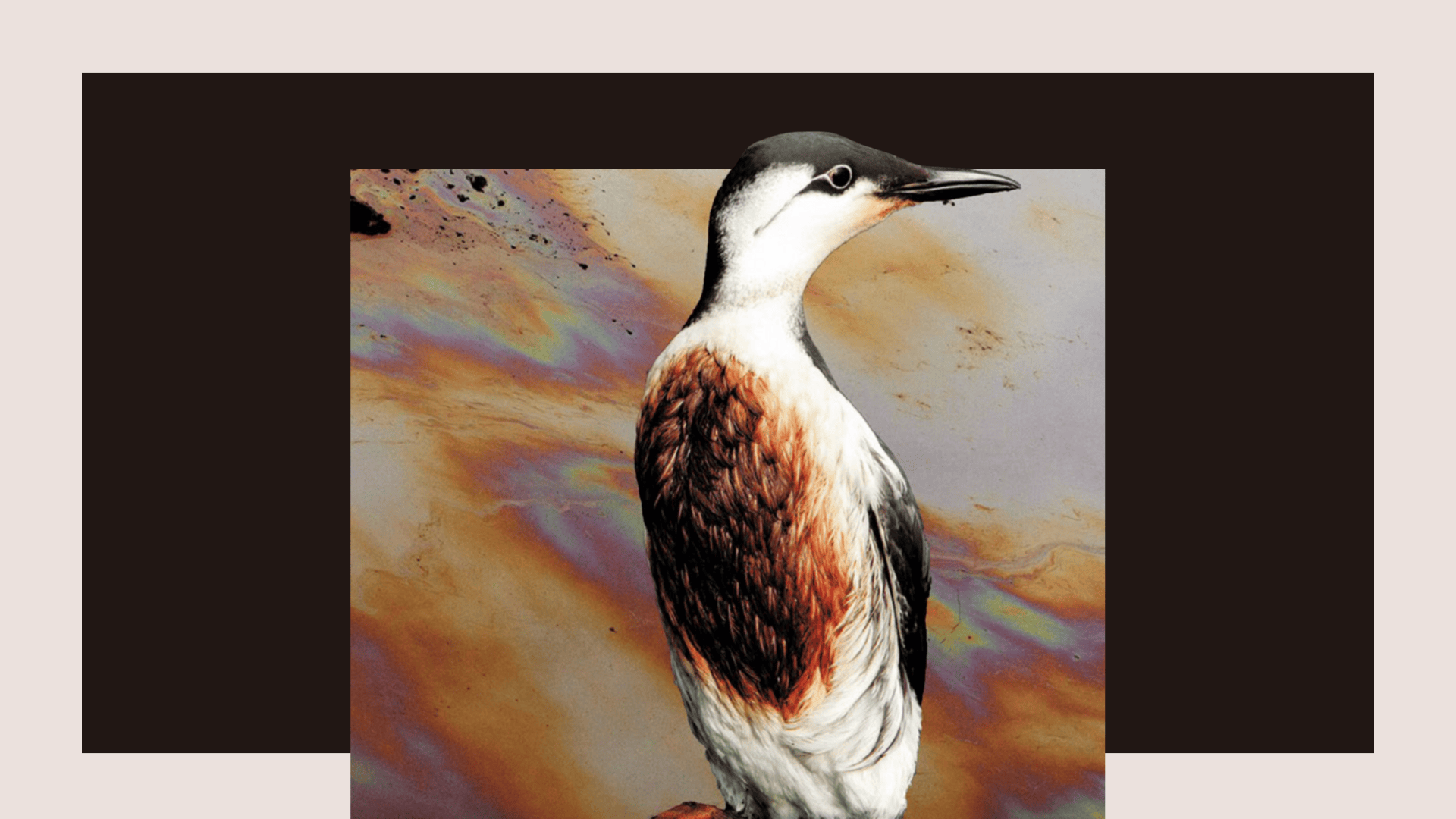
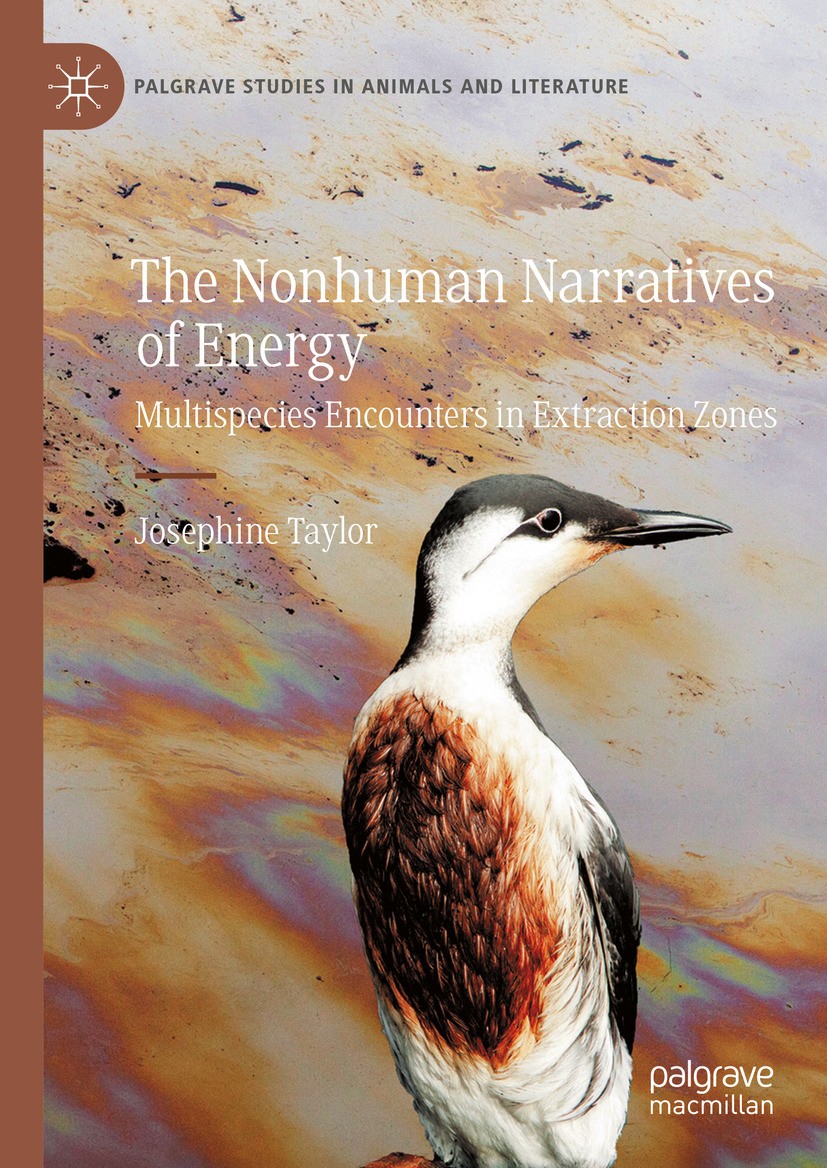
My new book, The Nonhuman Narratives of Energy (Palgrave Macmillan, 2025), makes a case for the centrality of animal life within cultural narratives of energy and extraction. It explores the material ways animals feature in and are part of energy production—from whaling to meat to serve as fuel and sustenance to the consequences of automobility (e.g., roadkill) and the impact of oil spills—and considers the theoretical ways that animal studies and energy humanities can inform one another. I ask and attempt to outline what significance animal studies might have, with its focus on multispecies ethics, its emphasis on empathy, affect, and philosophical enquiry, within the domains of petroculture and energy humanities. In a way, my book contends with Melissa Haynes’ question, “Why are animals so absent from energy?” (Haynes 2017, 35). But it also goes beyond this by suggesting that the ethical, philosophical, and political dimensions of valuing animal life have roles and implications for moving away from the violence of fossil-fuel energy.
My initial inspiration for considering the relationship between the fields of animal studies and energy culture was Carol J. Adams's pivotal work, The Sexual Politics of Meat (1990), which first incited me to think about the material and abstract ways the nonhuman animal features in spaces of extraction and energy production. In that work, Adams articulated a feminist vegan critical theory that captures the entwined oppression of women and animals and coined the concept of the absent referent. The absent referent is about cognitive dissonance and the distancing language, which entrenches the gulf between the violence of industrial animal slaughter and the act of eating meat. Multiple distancing tropes and reversals are at play both materially and discursively in how meat is consumed, and, as Adams argues, how women are treated: as a “piece of meat.”
Once I became familiar with the field of energy humanities and the study of "petro-ficition" in early 2016, I began to see interesting parallels with petrocultures’ concern with sight and vision, the pipeline politics of who witnesses extraction and who doesn’t, and Adams’ work and with animal studies more broadly. For Adams, confronting and tackling animal injustice and animal death, requires that the absent referent be made present to acknowledge the violence of industrial animal slaughter hidden in rural peripheries, out of sight from the everyday Western consumer. Like meat, crude oil extraction, too, is shaped by bureaucratic corporate masquerading and a politics of hiding. Production, at least in the UK, is often sequestered offshore where there is clear cognitive dissonance from the extractive process, despite our everyday immersion in petro-chemical products and the ways of life, as well as ideologies, it offers. My book looks at these synergies and foregrounds how an ethics of witnessing violence and suffering, witnessing a kind of planetary vulnerability, might serve as a mode of resistance to the politics that have shaped the era of fossil fuel energy and instead propose an anti-extractive paradigm.
Once I became familiar with the field of energy humanities, I began to see parallels between petrocultures’ concern with sight and vision, the politics of witnessing extraction, and animal studies’ insistence on making violence visible.
Woven within my close readings of what I have described as the nonhuman narratives of energy in cultural depictions featuring the coalescence of animal life within zones of extraction, I develop a philosophical and ethical argument that is grounded in what can be described as a recognition of bodily and earthly vulnerability. One of the key thinkers I draw on is the film and animal studies scholar Anat Pick, who opens her work, Creaturely Poetics, with a passage from the philosopher Simone Weil: “the vulnerability of precious things is beautiful because vulnerability is a marker of existence” (Weil 2002, 108). Like Pick and Weil, I understand how the value and importance of life – human and otherwise – is shaped by a recognition of its vulnerability. My book turns to scenes and moments of nonhuman vulnerability in cultural narratives of extraction. I analyse a range of fiction, photography and graphic novels which magnify the site of the extraction zone, sites of environmental violence and nonhuman suffering that is typically erased from popular view. With the decision to magnify the sight, the narrative, the visual or written experience of environmental devastation and/or animal suffering, would the act of witnessing this vulnerability of different lifeforms provide an impetus for political and ethical change? Would or could it provide a push for a transformation towards more just futures, proposing anti-extractive perspectives that move away from the politics and ideologies of fossil fuel energy?
Towards the end of my book I turn to the question of energy transition through science fiction (SF) narratives and its engagement with animal alterity. The Chinese SF writer Cixin Liu’s short story "Moonlight" opens as a somewhat cautionary tale of green capitalist solutions so prevalent in contemporary sustainability discourse and the push towards market solutions to the energy question. Turning to other SF writings, Ursula Le Guin and Stanislaw Lem, I suggest how a counter-hegemonic trend emerges, antithetical to technocratic solutions of energy transition, through a failure of human mastery and sovereignty towards a vulnerable co-existence with nonhuman life, a multispecies ethics, and towards the earth itself. My book wants to invite a thought experiment of what relations might become possible if mastery and progress are not their defining feature. If instead we recognize the vulnerability of ourselves and other creatures, what new modes of relation become possible? Can a world after oil be imagined without the extractive regimes of capital marching dominantly forward?
Notes
Adams, Carol J. The Sexual Politics of Meat: A Feminist-Vegetarian Critical Theory. 20th anniversary ed. New York: Bloomsbury Academic, 2020. https://doi.org/10.5040/9781501312861.
Gumbs, Alexis Pauline. Undrowned: Black Feminist Lessons from Marine Mammals. Chico, CA: AK Press, 2020.
Haynes, Melissa. “Animals and Energy.” In Fueling Culture: 101 Words for Energy and Environment, edited by Imre Szeman, Jennifer Wenzel, and Patricia Yaeger. New York: Fordham University Press, 2017.
Pick, Anat. Creaturely Poetics: Animality and Vulnerability in Literature and Film. New York: Columbia University Press, 2011.
Liu, Cixin. “Moonlight.” In Broken Stars: Contemporary Chinese Science Fiction in Translation, edited by Ken Liu. London: Head of Zeus, 2019.
Weil, Simone. Gravity and Grace. London: Routledge, 2002.
