12 Min Read
December 23, 2025
By
Joel Duncan is a writer and educator living in Gothenburg, Sweden. He is the author of Poetic Drive: American Poetry in the Age of Automobility (2025), now available from the University of Virginia Press at https://www.upress.virginia.edu/title/10153/. EH readers can receive a discount by using the code 10VABOOKS at checkout.
It has become a commonplace mantra that we need to change the way we live our lives, the ways we consume energy, and how we coexist with other lives and materials on this planet if we want to survive. Yet this mantra to change our lives already rings, for many of us, as too little too late. The tide is already rising, the fires already inexorably burning, and the way we live unsustainable. What does it mean, then, to live with a cataclysmic climate change that is already occurring as opposed to the sustainable transformation we had hoped, and may still hope, to see?
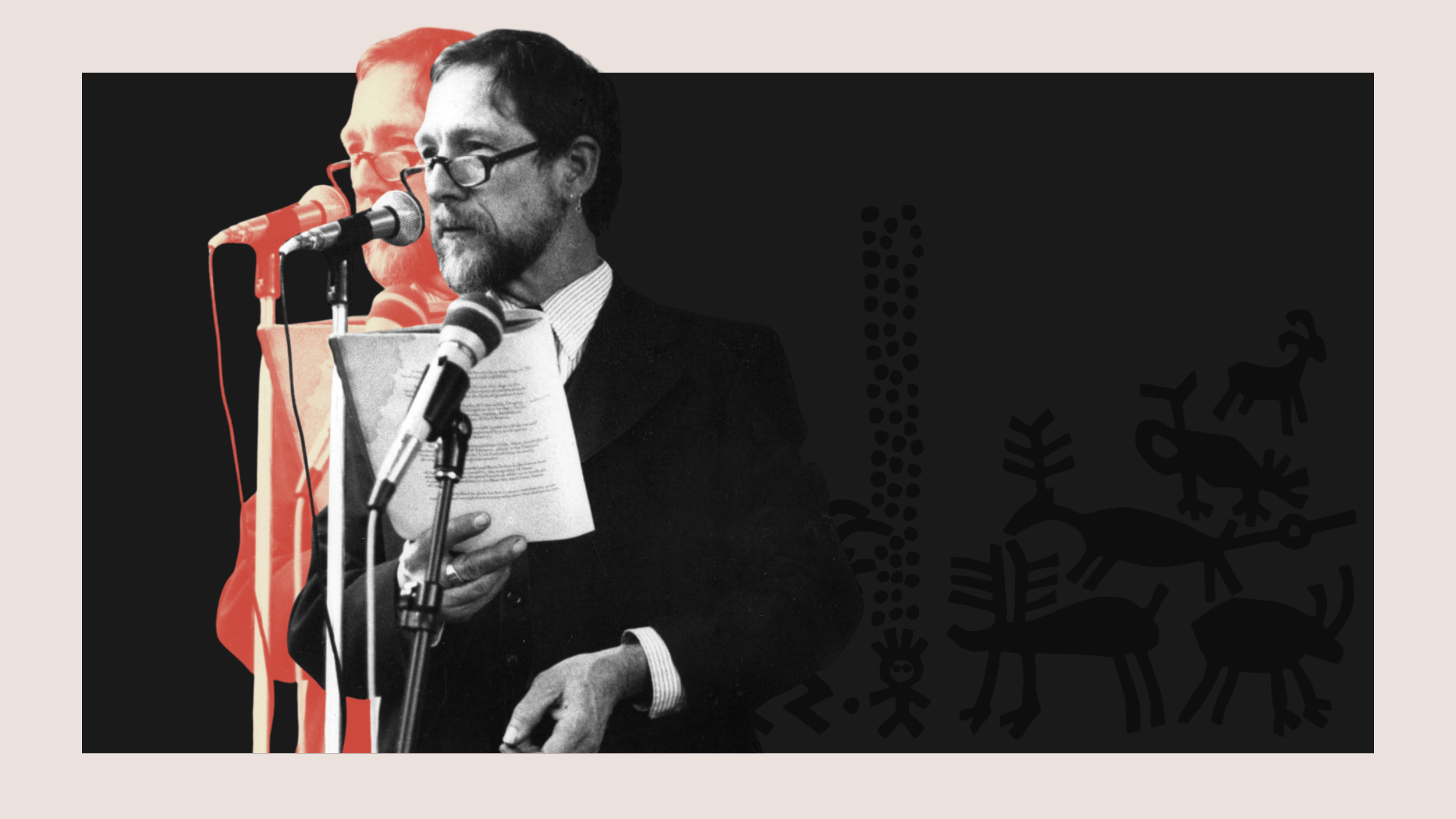
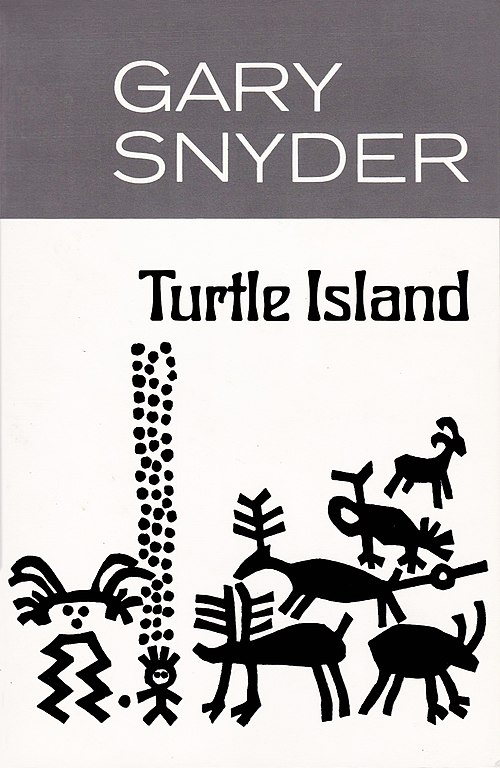
One place we can reflect on this difficulty is in poetry. To do so, I am going to turn to American poet Gary Snyder’s most famous collection, Turtle Island (1974), where he provides a double vision of petromodernity as both something we must contest and build alternatives to, and as something inescapable. The collection is well-known for melding poetry with political prose, offering a polemic against “exploitation-heavy-industry-perpetual growth” that requires “heavy energy use, great gulps and injections of fossil fuel.”1 One form of energy use that recurs throughout the collection is driving, with Snyder showing the deadly effects of automobility on other lifeforms in poems such as “The Dead by the Side of the Road,” or in his concern for pollution. In contrast to our destructive petromodernity, Snyder promotes Indigenous resistance and hippie alternativism, encouraging protesting, hitchhiking, and back to the land movements. After spending time in China and Japan he also imagines that zen meditation can be a part of a reorientation to “grow with less.”2
It is therefore striking that in his iconic poem, “Why Log Truck Drivers Rise Earlier Than Students of Zen,” Snyder seems to question the idea that we could create an effective alternative lifestyle to petromodernity. Indeed, the poem appears to channel the energy of a logging truck, as less a destructive intrusion upon the land, and more as a spiritual force. Here is the poem in its entirety:
In the high seat, before-dawn dark,
Polished hubs gleam
And the shiny diesel stack
Warms and flutters
Up the Tyler Road grade
To the logging on Poorman creek.
Thirty miles of dust.
There is no other life.3
In this short poem, the energy emanating from a logging truck is downright sexy, with its phallic “shiny diesel stack” that “warms and flutters” across “thirty miles of dust.” This lifelike truck appears to be a perfect example of what Stephanie LeMenager, in her book Living Oil (2014), describes as “the mystified ecological unconscious of modern car culture, which allows for a persistent association of driving with being alive.”4 But is the aliveness in this poem really “mystified” and “unconscious,” suggesting that there is another, more real way to be alive? As the cryptic final line of the poem declares, the drivers of these trucks are at least as alive to the present of petromodernity as “students of zen” are.
What are we to make of the life of these log truck drivers? It is important to remember that, as Timothy Gray points out, Snyder himself worked “as a timber scaler and log setter in Washington and Oregon” in the 1950s where he “saw firsthand the havoc that greedy lumber companies, and Western civilization in general, had inflicted on his beloved West Coast wilderness areas.”5 But this experience does not prevent the poet from identifying with the truck drivers; he appears to even venerate their daily life. How does this veneration square with his ecologically attuned political and poetical vision of living in harmony with the land, which is on display elsewhere in the collection?
In a captivating recent article, Tyler Sirovy argues that in Turtle Island Snyder situates “fossil love” against “fossil fuel,” advocating for cross-species entanglement that “occurs outside and against the petroleum-pathways of capital and industrial growth.”6 Sirovy reads “Why Log Truck Drivers Rise Earlier Than Students of Zen” as both performing our attachment to petromodernity and our feeling that there is nothing beyond it. “But,” as Sirovy pointedly puts it, “there is.”7 I am not as confident as Sirovy, though, that we can think entanglement beyond fossil fuels. Indeed, I suspect that it is the global entanglements of petromodernity that allow us to imagine, in a dialectical reversal, a positive version of cross-species entanglement. Snyder’s poem, rather than putting on display a kind of false consciousness of petromodernity, encourages us to be present for the damaged, entangled life we are already living.
The final line of Snyder’s poem—“there is no other life”—is a little revelation that poses the question of how we are to live between the present of petromodernity and its inevitable demise. In this way it has something in common with the koans that many practitioners of zen use to train their attention, the most well-known of which is “What is the sound of one hand clapping?” By harnessing our libidinal attachment to fossil fuels, this poem asks us to remain present to the world as it is, rather than as how we would like it to be. That final line is not definitive, but rather hints at its opposite: another life. Indeed, I wonder if Snyder had in mind the last line to Rainer Marie Rilke’s own sexy energy poem, “Archaic Torso of Apollo” (1908): “You must change your life.”8 Could it be that recognizing that there is no other life is also an act of altering it?
Such questions are perhaps unlikely to satisfy the will to change that animates communities like Energy Humanities. Yet the demand to change our current system has become all but commonplace, without effective results. What, then, are we to do? Whatever it is, Snyder’s poem reminds us that we are already doing it: There is no other life. To live with the reality of petromodernity is also to live with our own impotence, from which sexualized vehicles—such as Snyder’s diesel truck—seem to promise an escape. Yet we know that these hypnotizing vehicles are their own end. Poetry can also be its own end, if in another sense. And, if we are open to it, it may help focus our attention on the reality of the lives we are already living.
For more on poetry and petroculture, head over to Melanie Dennis Unrau's EH artist statement and poem from her new collection, Goose (Assembly Press, 2025).
Notes
1. Gary Snyder, Turtle Island (New York: New Directions, 1974), 105, 103.
2. Ibid., 104.
3. Ibid., 63.
4. Stephanie LeMenager, Living Oil: Petroleum Culture in the American Century (Oxford University Press, 2014), 80.
5. Timothy Gray, Gary Snyder and the Pacific Rim: Creating Counter-Cultural Community (University of Iowa Press, 2006), 68.
6. Tyler Sirovy, “Extracting Love: Petromodernity and Ordinary Entanglements in Gary Snyder’s Turtle Island,” Comparative American Studies: An International Journal 22, nos. 1–2 (2025): 23.
7. Ibid., 25.
8. Rainer Maria Rilke, The Selected Poetry of Rainer Maria Rilke, trans. Stephen Mitchell (Vintage Books, 1989), 61.
---
Joel's book is now available from the University of Virginia Press and fine booksellers everywhere. To learn more, read this UVA author interview. EH readers who purchase the book from the press can receive a discount by using the code 10VABOOKS at checkout.

