12 Min Read
December 23, 2025
By
Melanie Dennis Unrau is a poet, editor, scholar, and climate organizer of mixed European ancestry from Treaty 1 territory (Winnipeg). She was Writer in Residence at the Centre for Creative Writing and Oral Culture at the University of Manitoba in 2025. She is the author of Goose (2025), The Rough Poets (2024), and Happiness Threads (2013), a co-editor of I’ll Get Right On It: Poems on Working Life in the Climate Crisis (2025), and a former editor of The Goose journal and Geez magazine.
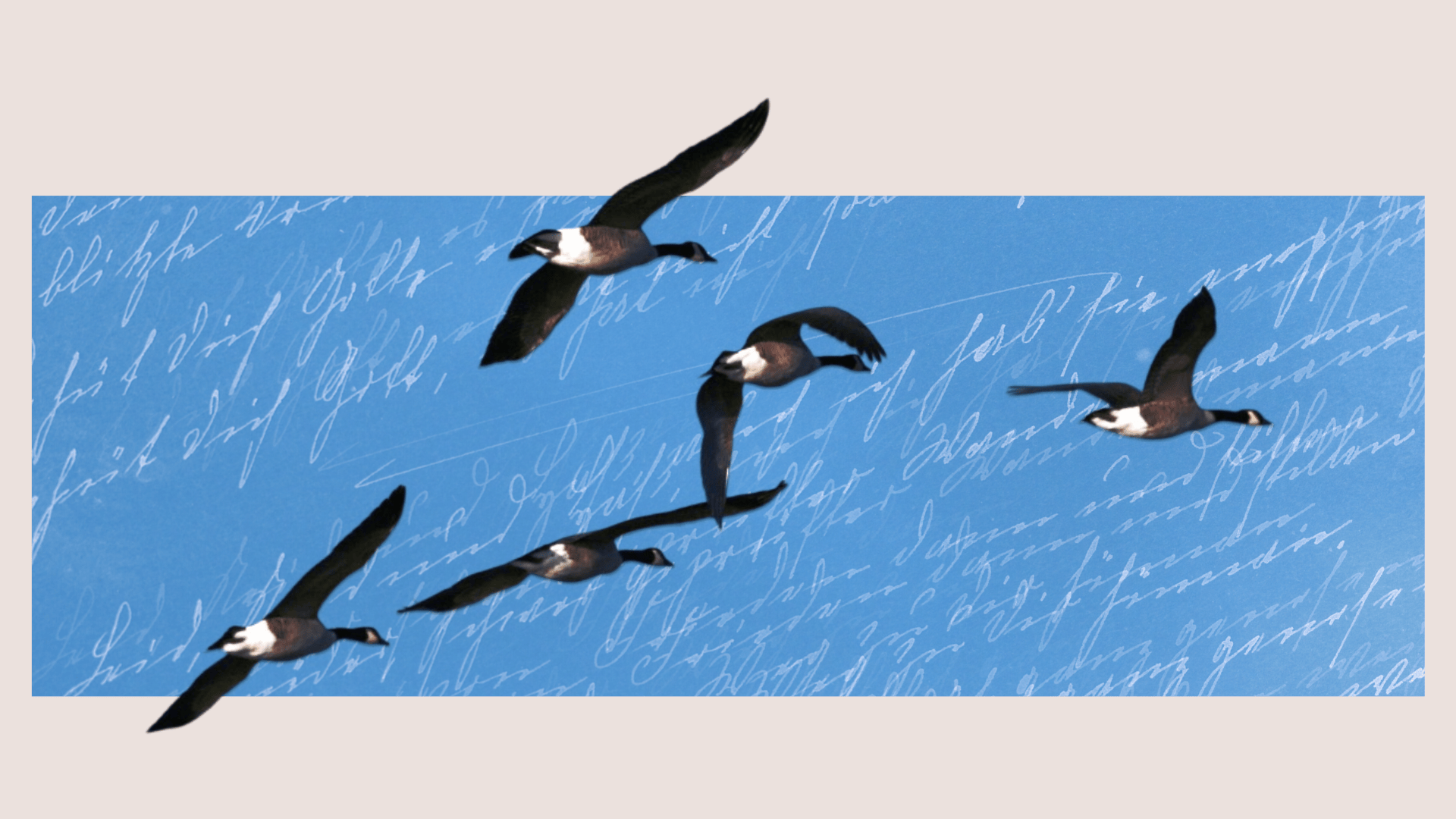
Sidney Clarke Ells (1878-1971) was one of the founders of the Athabasca tar-sands industry on Treaty 8 territory in northern Alberta; he liked to be called “the father of the tar sands.” First sent by the federal Department of Mines to investigate the deposits of bituminous sand near Fort McMurray in 1913, Ells made the development of a Canadian tar-sands industry the focus of his career until his retirement in 1945. He lived to see the opening of the Great Canadian Oil Sands, the first large-scale tar-sands mine, in 1967.
I first became interested in Ells while doing research for my book The Rough Poets: Reading Oil-Worker Poetry (McGill-Queen’s UP, 2024). Ells published Northland Trails, a self-illustrated collection of short stories, essays, and poems about the Athabasca region, in 1938 and in an expanded edition in 1958. This makes him one of the earliest oil-worker poets in Canada, although I observe in my chapter on Northland Trails that he avoided writing about his work, perhaps because he couldn’t reconcile his claims to love the northland with his determination to found an industry he knew would be destructive to the land and peoples of the region.
While writing The Rough Poets, I came up with a playful hypothesis: I suspect Ells may have liked to think of himself as a goose. I decided to explore that idea by making visual poetry using found text and images from Northland Trails and other related sources. This fun side project—which I found time to experiment with and refine while attending COVID-era Zoom meetings and holding two virtual residencies at the Banff Centre for Arts and Creativity—became the poetry collection Goose (Assembly, 2025).
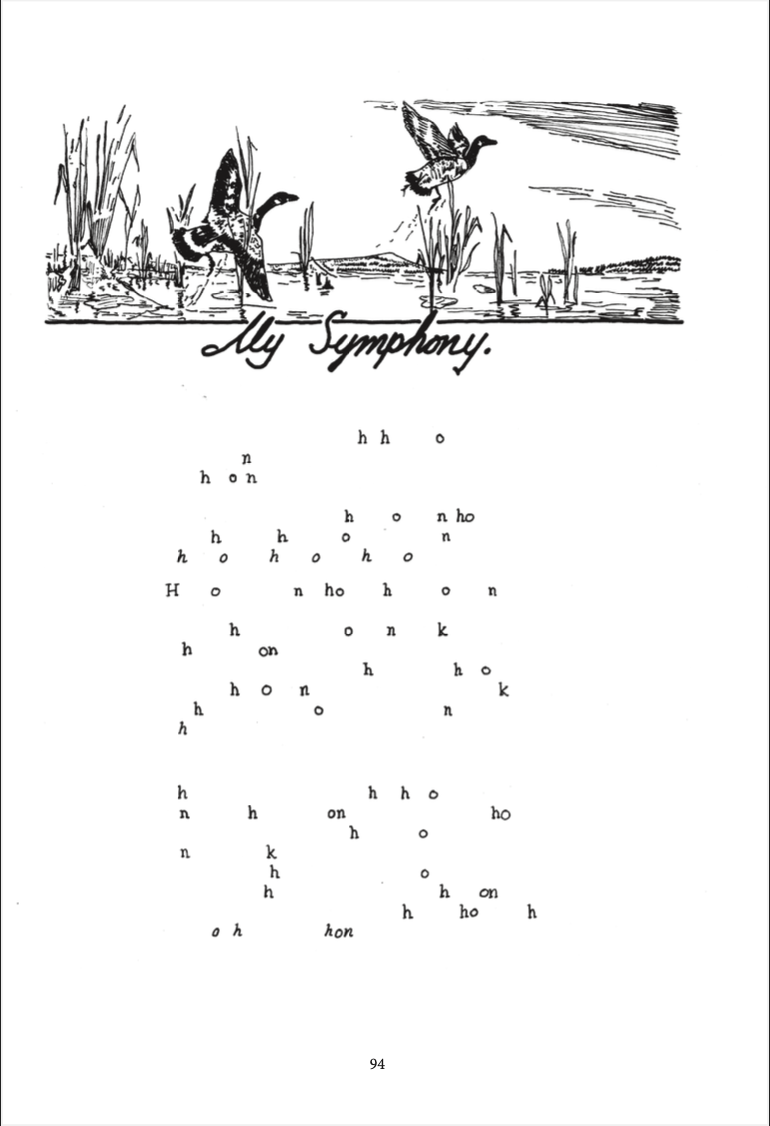
Like “My Symphony,” a poem extracted from and responding to Ells’s text of the same name, all the poems in Goose were handmade by copying words and images onto tracing paper. Whereas other poems gather isolated examples from throughout Northland Trails to show how much attention Ells gives to geese (and to contemplate what that might mean), “My Symphony” draws from one source poem that is all about geese. In his version of the poem, Ells celebrates the loud arrival of geese in the northland, “Stout-hearted heralds of the verdant Spring.”1 My version imagines Ells—a migrant from the south, determined both to belong in the northland and to make his mark on it—trying to be part of the symphony and to speak goose.
Really, the whole book implicates both Ells and me in the project of trying and failing to speak goose. Goose is research creation and deconstructive literary criticism. It is concerned with the colonial, racist, and sexist logics that have been part of the tar-sands industry since its founding, and the land and peoples who have always resisted and exceeded those logics. It also speaks to the hubris of the “nation-building projects” and the honking of supposedly great men we are being asked to put our faith in today.
Notes
1. S.C. Ells, Northland Trails, new and enlarged edition (Burns & MacEachern, 1956), 47. You can read the 1938 and 1956 editions of Northland Trails online.
---
For more on poetry and petroculture, check out Joel Duncan's EH essay on Gary Snyder's poem, "Why Log Truck Drivers Rise Earlier Than Students of Zen.”
