12 Min Read
March 26, 2026
By
Francesco Gerali is a historian of science specializing in the scientific and technological development of the modern oil industry. His research bridges geology, engineering, environmental history, and business history to examine the historical production and use of energy resources. He currently holds a Commonwealth Endeavour Fellowship at the University of Western Australia, where he is studying the origins of the modern Australian oil industry.
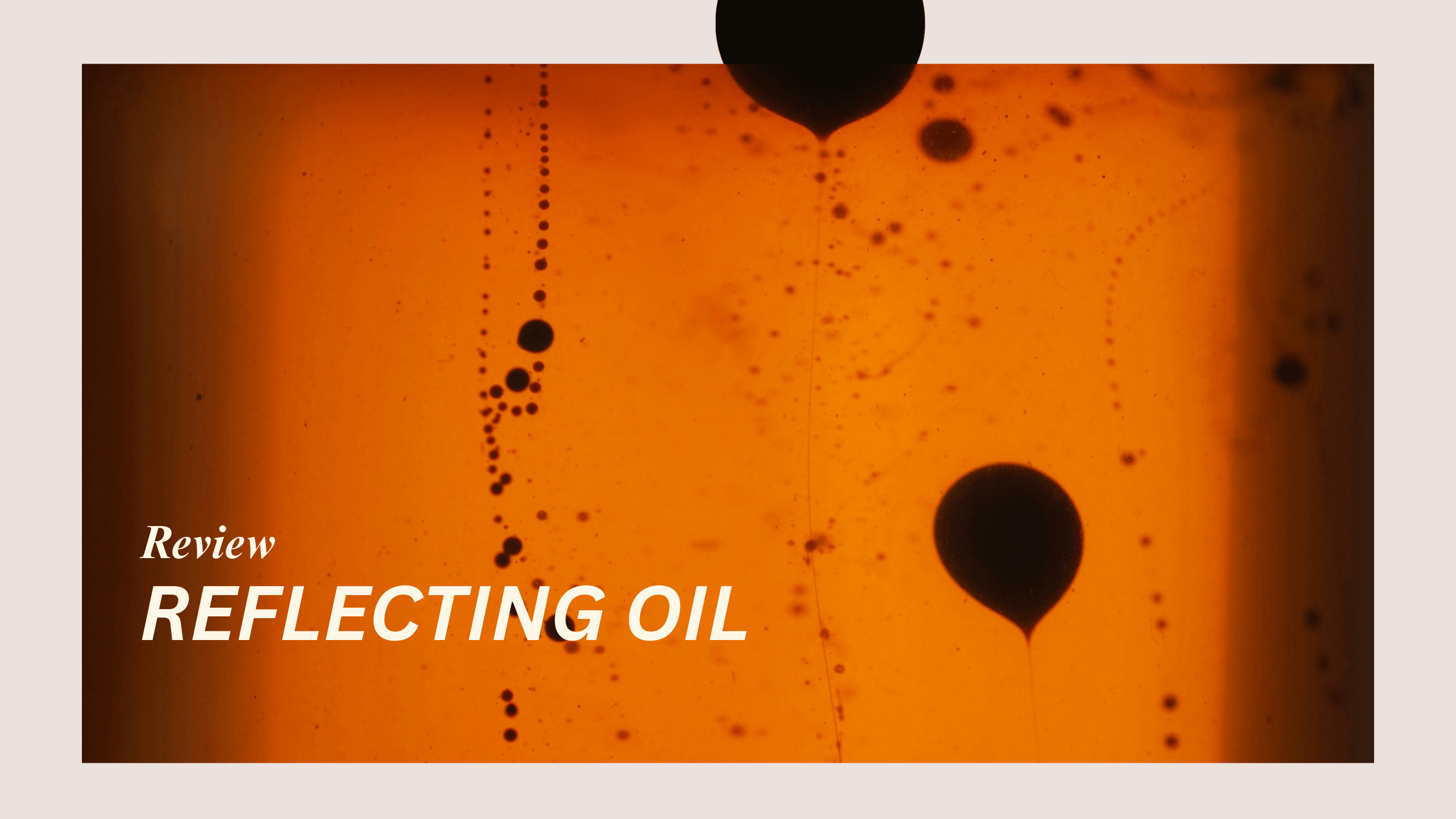
Ernst Logar’s edited volume Reflecting Oil is a one-of-a-kind contribution to the energy humanities and a compelling demonstration of arts-based research as a mode of knowledge production. Emerging from the five-year interdisciplinary project Reflecting Oil: Arts-Based Research on Oil Transitionings (2019–2024), funded by the Austrian Science Fund (FWF), the book is a literary, visual, and conceptual experience that brings together artists, scientists, engineers, and scholars to explore crude oil not merely as a resource, but as a cultural, political, and epistemological force. It offers a comprehensive and multiperspectival understanding of oil’s pervasive influence—material, sensory, and symbolic—on contemporary life.
What makes Reflecting Oil especially valuable is its methodological innovation. The integration of scientific experimentation with artistic practice is not tokenistic but deeply embedded. The volume exemplifies what arts-based research can achieve when it is not merely illustrative but constitutive of inquiry. It also offers a model for interdisciplinary pedagogy, with rich visual documentation and accessible language that make it suitable for teaching across disciplines. The project’s educational ambition—to inspire students and bridge the gap between scientific knowledge and public awareness—is clearly realized.

The volume is structured into four main chapters subdivided into thematic essays, each corresponding to a phase of the research project and its evolving methodologies. This editorial architecture mirrors the project’s trajectory: from conceptual framing to experimental inquiry, collaborative synthesis, and artistic expression.
The first chapter, “Foundational Perspectives,” sets the theoretical and methodological tone. Logar’s essay, “Shattering the Oil Mirror,” introduces the concept of “petro-subjectivity,” drawing on Brett Bloom’s notion of oil as a structuring force in modern identity. He calls for a sensory, holistic understanding of oil that challenges its cultural invisibility. Holger Ott’s “Towards Petro-Objectivity” complements this with a scientist’s view, reflecting on the cultural and technical challenges of energy transition. Imre Szeman’s “Experimenting with Oil” situates oil modernity within broader historical and cultural imaginaries. Together, these essays foreground the book’s central tension: how to reconcile oil’s omnipresence with its perceptual and conceptual elusiveness.
Chapter Two, “Experimental Approaches,” documents a series of interdisciplinary experiments conducted in collaboration with the University of Leoben’s Department of Geoenergy. These include Hele-Shaw cell visualizations, bacterial toxicity tests, tactile fingerprinting, and olfactory analyses culminating in a synoptic “Olfactory Crude Oil Wheel.” Particularly striking is the use of cultural substances—milk, honey, Coca-Cola—as analogues to explore oil’s behavior and symbolism. These experiments are not merely illustrative; they are epistemologically generative, challenging disciplinary boundaries and foregrounding the role of sensory perception in knowledge production. They demonstrate how artistic research can reframe scientific inquiry and make abstract phenomena tangible.

The third chapter, “Colloquium and Collaborative Outputs,” centers on the 2022 Reflecting Oil Colloquium held at the University of Applied Arts Vienna and exemplifies the project’s commitment to co-creation, dialogic knowledge, and educational outreach. It features contributions from three interdisciplinary working groups. Group One explored oil as a material for artistic experimentation. Group Two examined oil’s visibility and invisibility through the lens of Nigerian photographer George Osodi’s work on the Niger Delta. The third group developed a speculative graphic novel, “Teresa,” imagining a post-oil future through the life of a young Brazilian girl. These contributions—essays, dialogues, and poetic reflections—are coherently structured around oil’s entanglement with identity, infrastructure, and imagination.
The final section, “Artistic Synthesis and Exhibition,” documents the culminating exhibition Reflecting Oil. Petroculture in Transformation (Vienna, 2024). Art historian Raphaelle Occhietti offers a richly textured curatorial essay weaving together the exhibition’s key works. These include kinetic sculptures such as Good Vibes, which links engine noise to splashes of crude oil; Oil and Blood, a window installation merging the two substances; and The Revised Game of Life, a board game that literalizes oil’s infiltration into everyday life. Particularly evocative are Logar’s Crude Oil Sculptures, resin-based miniatures of oil rigs filled with oil, and The Space Between Us, a poetic installation of hand molds absorbing oil over time. The Fingerprints Experiment, whereinparticipants engage directly with oil samples, is exemplified by the successful facilitationby the exhibition of a sensorial encounter that challenges the perceived invisibility of oilin quotidian existence.
The detailed descriptions of these artworks, alongside their conceptual underpinnings, demonstrate art’s capacity to function as a medium for critical reflection, prompting viewers to confront their complicity within the petroeconomy. The exhibition’s ability to interweave individual experience with global narratives of extraction, consumption, and environmental impact attests to the project’s comprehensive vision. Occhietti emphasizes the recursive spectatorship demanded by the exhibition: the artworks are not didactic but invitational.
Reflecting Oil is a finely conceived volume, enriched by an outstanding iconographic apparatus integral to its argument. It distinguishes itself from the stasis of many academic proceedings by maintaining a format that is intellectually rigorous and artistically dynamic. It offers a compelling model for studying a complex global phenomenon—whether substance, system, or crisis—through direct material engagement. It also responds to the call from scholars such as Amitav Ghosh, who noted oil’s muteness and invisibility in cultural production, by making the substance radically present.
A remaining question concerns the scalability of this perceptual shift. The book offers a compass rather than a roadmap. The individualized encounters with oil that the project facilitates represent a crucial step in denaturalizing petroculture, yet the path from awareness to collective political and economic transformation remains uncertain. While the volume does not claim to provide definitive solutions, it clarifies what is at stake. By insisting on the necessity of thinking with oil before imagining a world after it, Reflecting Oil serves as an indispensable resource for scholars and practitioners in environmental humanities, visual culture, science and technology studies, and the cultural politics of energy.
In conclusion, Reflecting Oil fills an important gap by exemplifying the power of arts-based research to illuminate the complexities of the fossil age. As societies grapple with the transition to post-fossil futures, this book offers not only critique but imaginative and sensorial pathways forward.
Reflecting Oil is available open access here:
https://www.degruyterbrill.com/document/doi/10.1515/9783689240462/html
